Australian worksites are changing…
Noise limits are tighter, air-quality expectations are higher, and programs are increasingly staged in live environments like hospitals, schools, transport and retail. That is pushing project managers to rethink power sources and equipment selection. Electric and hybrid platforms are no longer niche; they are fast becoming standard for a growing share of indoor, urban and remote jobs. Diesel still has a place on heavy load, rough terrain applications, but viable electric alternatives now exist to match the power source to the work.
Where electric provides a valuable alternative
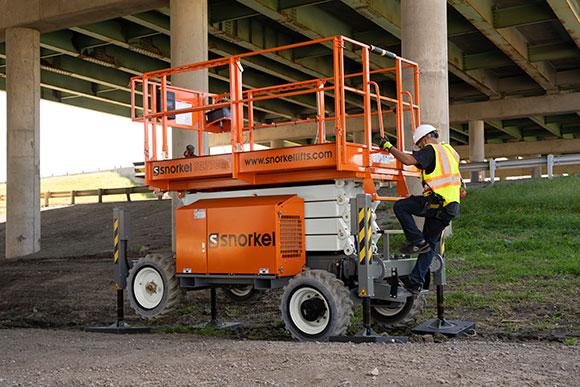
Battery technology and control systems have matured. Lithium packs now provide fast charging and consistent power delivery. For projects where access equipment performs multiple short tasks on level terrain, that translates to predictable performance and benefits from reduced noise and emissions. Advances in electric models are now
providing powerful options for rough terrain, extending benefits in the following areas to a wider range of sites.
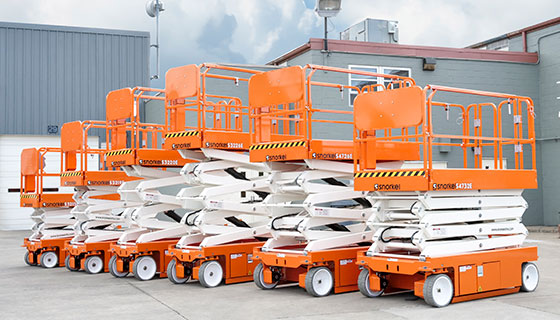
- Indoor and enclosed spaces. Zero local emissions and low noise simplify approvals and improve site communication and comfort for construction crews.
- Night works near the public. Less noise means longer productive hours.
- Stop-start duties. Electric drive systems excel when machines spend time positioning rather than travelling at speed.
When diesel still makes sense
- High utilisation outdoors. Long travel distances, steep grades, and continuous duty favour diesel’s ability to maintain power output.
- Remote work with limited power. If charging infrastructure is not feasible, diesel remains practical.
- Extreme environments. Where temperature and rough terrain push machines hard, modern diesel engines with the right maintenance regime keep availability high.
Total cost and lifecycle view
The right question is not “electric or diesel,” but “what provides the best whole-of-life value for the project?” A structured assessment of duties such as terrain, indoor or outdoor, typical height, travel distance, operating and idle time, site location and serviceability will enable best value selections of electric or diesel. Consider:
- Energy cost per operating hour – litres of diesel vs cost of charging.
- Maintenance schedule – filters and fluids vs routine electrical checks.
- Logistics – refuelling or charging layout, including generator support.
- Project or site value – gains in working windows, fewer noise complaints and worker comfort.
Safety and compliance
- Regardless of powertrain, insist on tilt and load sensors, effective guarding and appropriate rough terrain protection systems.
- Design training and safe work procedures that are machine-specific and cover either battery, diesel or hybrid.
- Communicate the limitations of electric and diesel models, especially if operators are using both on-site.
Procurement guidance
Electric and diesel will coexist for years, with research showing that electric is used for an increasing variety of applications as new models are released with greater power or terrain capability. Match the power source to the task, backed by a structured assessment, and build charging or refuelling support that fits your site. If your access requirements can be better met by changing some or all your equipment to electric or hybrid, here are some actions for an effective and best-value transition:
- Map your upcoming work types to identify potential activities for the use of electric equipment.
- Identify sites with environmental constraints; either supporting electric, such as night or inside work, or challenging electric, such as charging difficulties or heavy use on rough terrain.
- Set performance targets that machines need to achieve, such as availability, charge window and run time, and evaluate models against the duties they perform.
- Ask for telematics-enabled units so you can monitor utilisation, identify faults and adjust future equipment selection.
